
















Revolutionary technology expected to cut drilling costs, increase efficiency, and create entirely new categories of mechanical problems
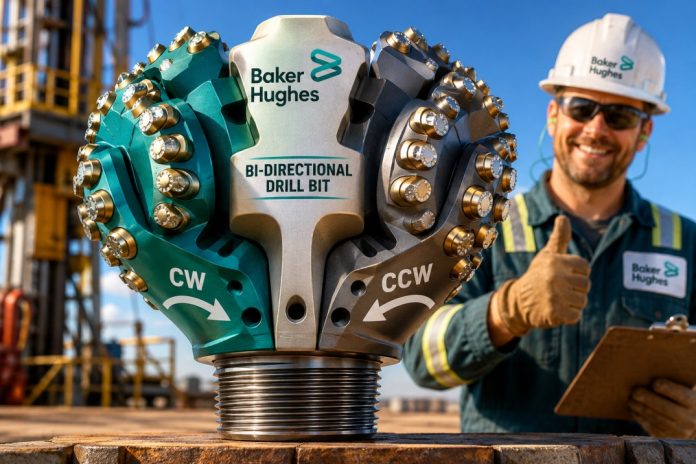
HOUSTON — In what industry analysts are already calling “the biggest drilling innovation since someone first suggested making the hole deeper,” Baker Hughes announced Tuesday that it will release a new line of bi-directional drill bits in Fall 2026 capable of drilling both clockwise and counter-clockwise.
The company says the technology could effectively double drill bit life by allowing operators to wear down one side of the cutting structure before simply reversing direction and using the other side.

“Historically, drill bits have been tragically one-directional,” said a Baker Hughes spokesman, Barry Bitz, while standing beside a scale model of a bit that looked suspiciously like two drill bits glued together. “For over a century, we’ve accepted the idea that bits only cut while turning one way. We asked ourselves a simple question: what if we ignored tradition, physics, and several strongly-worded emails from drilling engineers?”
The answer was the Bi-Directional Diamond Cutting System™.
The new bits feature specially engineered dual-faced diamond-coated cutters capable of shearing rock formations regardless of rotational direction. According to company literature, operators can simply reverse the top drive whenever one side of the cutting structure becomes worn.
Industry reaction has been overwhelmingly positive.
“This changes everything,” said one drilling manager in the Permian Basin. “Normally when a bit wears out, we have to trip out of hole, replace it, and trip back in. With these new bits, we can just reverse rotation and immediately start wearing out the other side. It’s like getting two disappointing bits for the price of one.”
Early field tests reportedly showed impressive results.
One test well drilled over 12,000 feet before the bit reached end-of-life. Another achieved a record-setting 18,000 feet after crews accidentally forgot which direction they were supposed to be drilling and spent three weeks alternating every four hours.
The key breakthrough, according to Baker Hughes engineers, was solving the industry’s long-standing challenge of keeping every threaded connection in the drill string from unscrewing itself when rotation is reversed.
For decades, experts believed this problem was insurmountable.
Baker Hughes’ solution was surprisingly elegant.
“We use industrial-strength Loctite,” explained the lead engineer. “A lot of it.”
Sources within the company confirmed that each connection is coated with what has been described as “an irresponsible amount” of heavy-duty quick-drying thread locker.
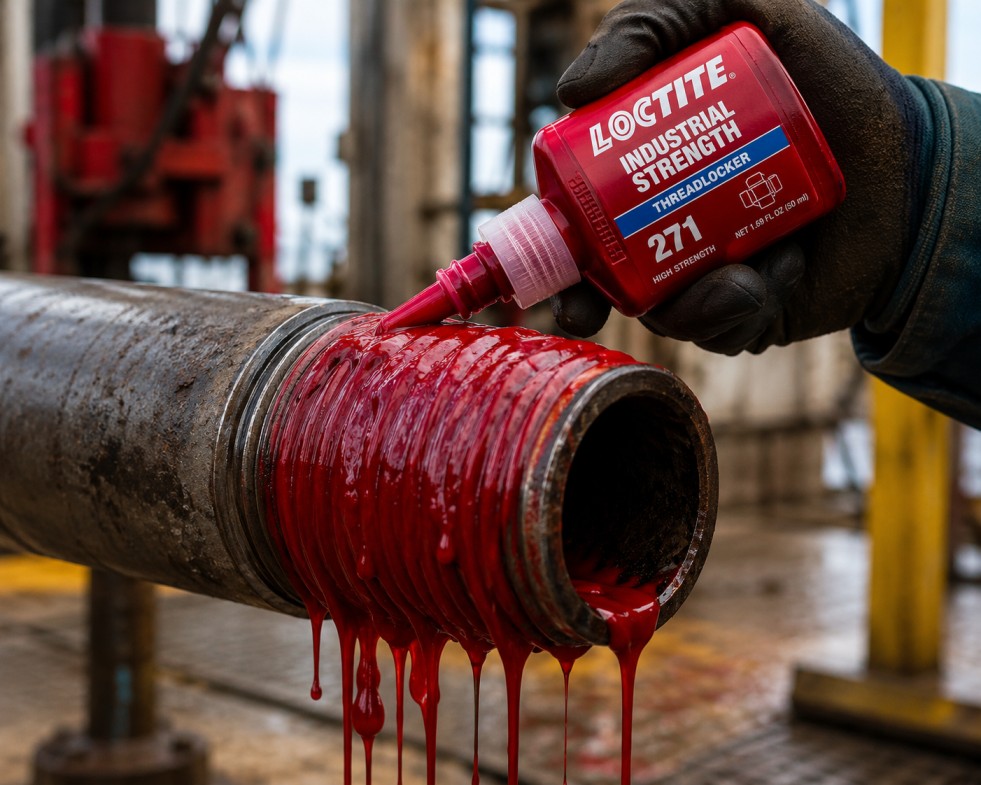
“We started with the recommended dosage and worked our way up from there,” the engineer said. “Eventually we reached a point where the drill pipe essentially became a single solid object. That’s when we knew we had something special.”
The company claims the proprietary adhesive system was tested under extreme conditions including high torque, high temperature, vibration, shock loading, and one particularly aggressive roughneck named Trevor.
Industry experts have praised the innovation.
“Normally, reverse rotation would immediately back off every connection in the drill string,” said a professor of drilling engineering. “But if all 600 joints are permanently glued together, that problem largely disappears.”
Investors responded enthusiastically to the announcement, sending Baker Hughes shares higher as analysts projected billions in future savings from reduced bit trips.
One major operator estimated the technology could save millions annually.
“Every trip costs money,” said the company’s drilling superintendent. “If we can leave the bit downhole twice as long, that’s enormous. Frankly, this is the kind of breakthrough our industry needs.”
The project remains on schedule for commercial release later this year.
Company representatives say only one minor technical challenge remains unresolved.
As it turns out, while engineers successfully developed a method to prevent drill pipe connections from coming apart during drilling, they have not yet developed a method to make them come apart afterward.
“We’ve solved the unscrewing problem completely,” said the project manager.
Asked how crews are expected to remove individual joints while tripping out of hole, the manager paused for several seconds before replying.
“That’s an excellent question.”
At press time, Baker Hughes engineers were reportedly evaluating several potential solutions, including explosive charges, plasma cutters, controlled orbital lasers, and simply abandoning the drill string in every well after use.