CALGARY, Alberta – Scientists at the International Institute for Unnecessarily Complicated Research (IIUCR) have cracked one of humanity’s longest-standing mysteries: why almost everyone yawns within minutes of talking to an engineer.
The research team spent 12 years, $48 million in grant money, and 11 marriages analyzing 14,206 engineer-human conversations, only 7 of which ended without yawns (those were with people who were already asleep).
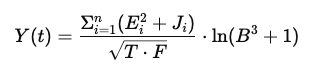
The study, published in The Journal of Applied Overthinking, analyzed over 14,000 social interactions between engineers and normal people. Using a blend of advanced data analytics, fluid dynamic modelling, and something called Quantum Boredom Mechanics™ (or QBM), researchers derived a formula that perfectly models the onset of yawning during engineer-human dialogue:
Where:
Y(t) = yawns per minute,
Ei = number of acronyms used per sentence by the engineer
Ji = number of times the engineer says “actually,’
T = the listener’s tolerance threshold for pipe diameter calculations
F = a dimensionless fun factor (which for engineers averages at 0.000002)
B = length in minutes of a tangent about the intricacies of estimating the contacted rock volume of a well in the pseudo-boundary dominated flow regime
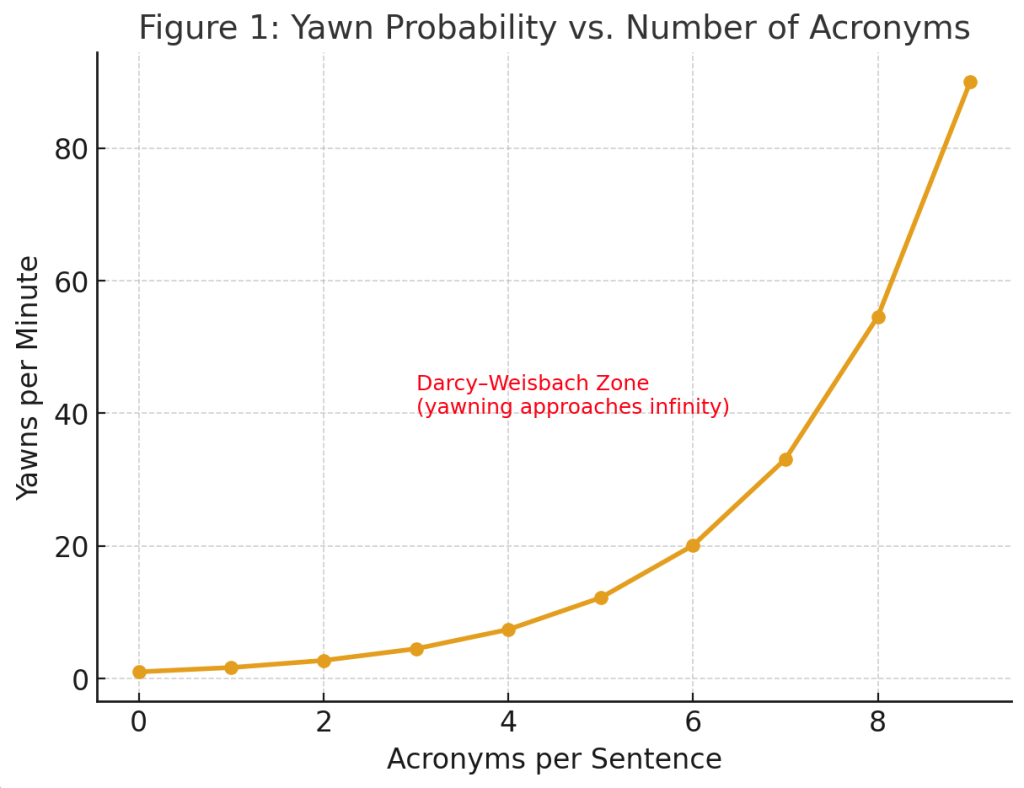
When graphed, the equation yields a yawning curve almost perfectly matched the “nuclear reactor decay” model, except that instead of cooling rods, the engineers inserted more acronyms.
Figure 1: How yawning probability explodes exponentially with each additional acronym used by the engineer, with the curve spiking to infinity once “Darcy-Weisback” is mentioned.
Lead researcher Dr. Ingrid “Math Jockey” Schtuffleblatz explained the results at a press conference while three reporters dozed off mid-sentence.
Dr. Schtuffleblatz, lead researcher
“The math shows that even a single discussion of Bernoulli’s equation while holding a beer can cause a 43% probability of the listener yawning within 22 seconds,” Schtuffleblatz said. “After 90 seconds, most participants had either yawned, fallen asleep, or started making grocery lists in their heads.”
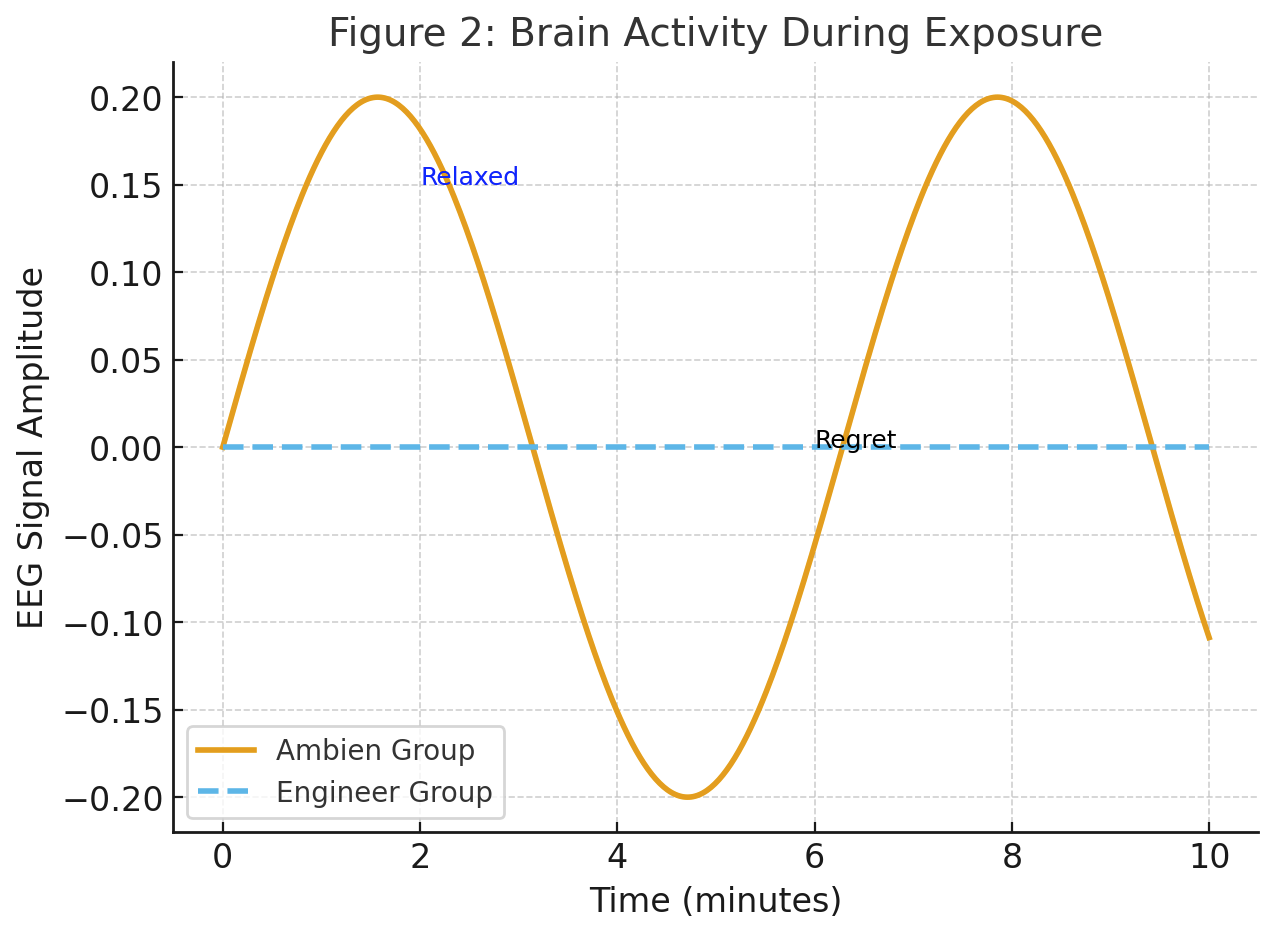
Figure 2: This plot compares the average listener’s brain activity during an engineer’s explanation of pump curves during an Ambien clinical trial. The Ambien group shows gentle sleepy waves, while the group exposed to conversations with engineers flatlines into pure regret at time zero.
The study also identified The Engineer Yawn Multiplier Effect: every time an engineer says, “It’s not that simple,” the listener’s risk of narcolepsy triples.
Key takeaways from the study are as follows:
Yawn onset accelerates by 17.8% per acronym used beyond the third in a sentence.
Listeners exposed to more than 2 references to Darcy–Weisbach equations entered a “semi-coma-like state” within 5 minutes.
Civil engineers caused fewer yawns on average, though researchers note this may be because most people were already asleep before the civil engineers even started talking.
Engineers wearing polo shirts tucked into tan cargo shorts generated 4.2 times more yawns than baseline data.
Civil engineers produced less yawning but more headaches, likely due to PowerPoint slides built using Comic Sans font.
To validate the data, researchers conducted double-blind tests: in one experiment, subjects were hooked up to EEGs while engineers described flange tolerances. In every case, the subjects’ brains emitted waveforms indistinguishable from those recorded during Ambien trials.
Industry groups are now warning of potential liabilities. A company spokeswoman for Bendovus Energy admitted,
Gurpreet Jackson, VP of HR at Bendovus Energy
“We might need to put warning labels on our engineers, especially those reservoir types, or at least hire interpreters who can translate rumblings about minimum miscibility pressures into something resembling human speech.”
The team plans follow-up studies on other critical questions, such as: Why do engineers laugh only at jokes about stress-strain diagrams? and Is it possible to discuss thermodynamics without killing the mood at a dinner party?
Until then, the researchers recommend that anyone forced into a conversation with an engineer should:
Carry smelling salts.
Pretend to take an urgent phone call.
Interrupt engineers every 45 seconds with, “Cool, but did you see the game last night?”
Hand the subject engineer a calculator set to “ERROR” and walk away while he or she panics.
The research team’s next study will attempt to quantify why engineers laugh hysterically at stress-strain diagrams while their spouses quietly file for divorce.