










By Cynthia Redbush | 2P News – Education, Petroleum, and Paper Cuts Division
EDMONTON, AB – Following their government-forced return to classrooms, Alberta teachers are adapting to new realities with an unprecedented plan: enlisting unemployed engineers and geologists from the oil patch to “help manage educational turbulence” in the classroom.
2P News’ senior education correspondent Cynthia Redbush sat down with ATA President Jayson Billing, who explained the union’s strategy while nervously constructing a stress pyramid out of chalk, coffee stir sticks, and a discarded calculator.

Cynthia Redbush (2P News):
Mr. Billing, thank you for joining us. Now that teachers have been legislated back to work, how’s morale?

Jayson Billing (ATA):
Morale is… holding steady at about 3.6 on the Richter scale. Teachers are back in classrooms, the smell of dry erase markers fills the air, and some are already whispering phrases like “emotional fracking” and “curriculum recovery factor.”
But we’re adapting, Cynthia. That’s why the ATA is rolling out our new initiative: Engineers and Geologists in Education™.
Redbush:
I’m sorry — Engineers and Geologists in Education?
Billing:
That’s right. We realized Alberta has tens of thousands of brilliant, jobless engineers and geologists just sitting around calculating porosity or screaming at Excel for no damn reason. So we thought, why not put them to work in schools?
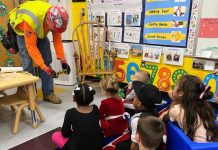
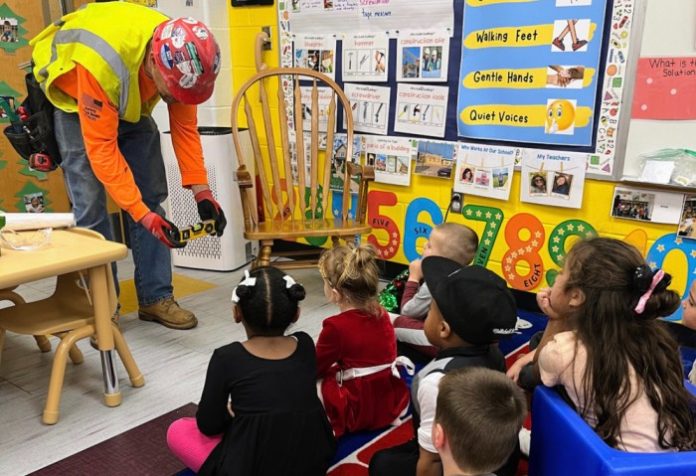
They’ll serve as Technical Educational Assistants (TEAs), helping teachers interpret grade books like production charts, run physics labs like drilling operations, and apply seismic risk analysis to playground dodgeball.
It’s really a perfect fit when you give it some thought.
Redbush:
How are they adapting to classroom life?
Billing:
Oh, beautifully, or disastrously, depending on your definition of “adapt.”
We had one geologist in Red Deer start every lesson by demanding students “describe the stratigraphy of their lunch with a focus on the lithology of the bread that holds it all together.”
A completions engineer assigned to Calgary’s Central Memorial High School replaced the water fountains with a “hydraulic learning enhancement station” and began charging students a carbon offset fee for drinking.
And one poor pipeline designer tried to optimize student flow efficiency between classes by installing temporary fencing and one-way corridors. We’re still untangling them.
Redbush:
That sounds… innovative?
Billing:
It’s disruptive education, Cynthia. Just this morning, a group of reservoir engineers built a “Pressure-Volume-Temperature” model for emotional growth. They concluded that 92% of teenage angst can be solved by depressurizing social studies homework.
Meanwhile, geophysicists in many schools located across West Shale Basin are running GPR (Ground Penetrating Radar) surveys in gymnasiums to locate lost dodgeballs and decades of suppressed trauma.
Redbush:
Are parents supportive of this plan?
Billing:
Mostly. Some parents have complained that their kids are coming home using words like “hydrothermal alteration,” “sandface fluid velocity,” and “relative perm crossovers.”
But others are thrilled. One mother told us her son’s science fair project, titled “Reservoir Simulation Using Chocolate Milk,” received an A+ and a $50 Petro Canada gift card.
Redbush:
How are these oil and gas professionals being trained for the classroom?
Billing:
They’re not. We just gave them vests, a clipboard, attendance list, and told them to “help.”
Some engineers took it literally: they’ve started conducting full safety briefings before every art class. Students are required to wear steel-toed crocs or Birks, if they wear PJs then they must be fire retardant, and they must file hazard assessments before using glue sticks.
One drilling engineer even installed a blowout preventer on a papier-mâché volcano citing, “It’s better to be safe than sorry – it’s all about keeping the kids safe around here on my watch.”
Redbush:
And what do the teachers think?
Billing:
They love the extra help their TEAs. Teachers now have more time to focus on (their own) emotional support while the engineers argue about units of measurement.
We’ve even paired one English teacher with a drilling engineer: she’s teaching him about metaphors, and he’s teaching her about mud weight. It’s a beautiful thing, poetry in motion.
Redbush:
What’s next for the ATA?
Billing:
Phase Two: Substitute Teachers from the Oil Sands.
If a teacher calls in sick, we’ll send in a shift foreman, a welding inspector, or a well-site geologist fresh off a night shift. We’ve already piloted this in Fort McMurray. The students now greet attendance with “All accounted for, shift lead!” and salute the SmartBoard.
Our goal is synergy. Or at least confusion.
Redbush:
Any closing thoughts?
Billing:
Yes, my friend: Alberta’s education system is under pressure, but if there’s one thing this province knows, it’s how to turn pressure into production.
We’ve got geologists marking attendance by lithology, engineers calculating recess ROI, and teachers clinging to sanity like a brittle shale layer.
Frankly, Cynthia, this might be the first time in history that the words “educational” and “fracking” belong in the same sentence.
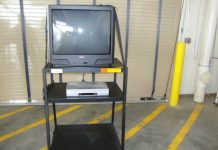
At press time, Jayson Billing was seen holding a press conference next to a TV cart powered by a small pumpjack, declaring, “Learning is the new oil.” The ATA later confirmed the pumpjack was purely decorative, but still somehow part of the curriculum.
Reader Comments

Ms. H., Calgary Teacher:
“My new assistant insists on referring to pencils as ‘logging tools.’ I’m okay with it.”
Grade 8 Student, Red Deer:
“Wow! We learned about rock formations and oppressive capitalism in one class. I think I understand Alberta now.”
Education Minister Todd Bangsworth:
“Finally! An education initiative that pays for itself in reclaimed PPE.”